.png)
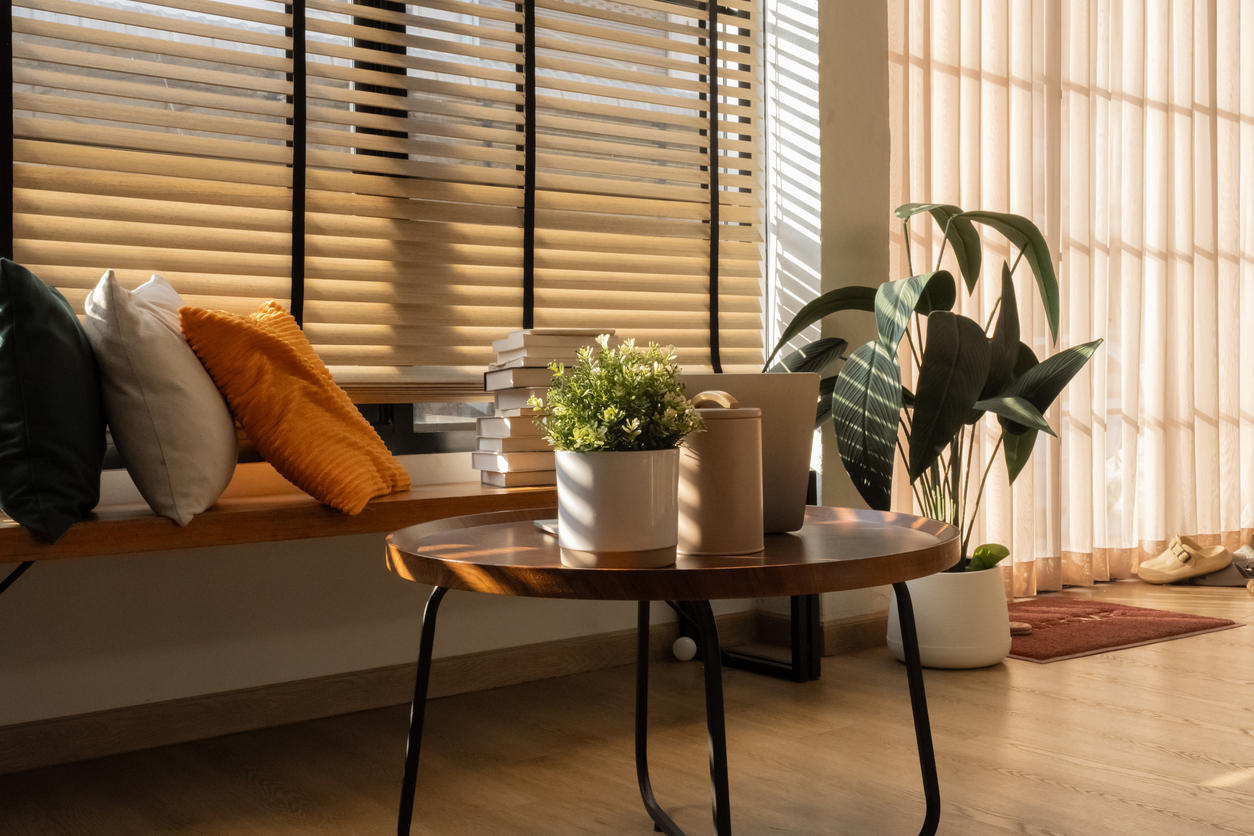
Sydney homes are in the middle of a genuine design shift. After years of cool minimalism and stark white walls, interiors across the city are warming up, and nowhere is that more visible than at the windows. The choices homeowners are making in 2026 are richer, more tactile, and considerably more considered than the flat roller blinds and grey sheers that dominated the previous decade.
The short answer: the biggest trends right now are layered window treatments, linen and natural fabrics, warm earthy palettes, smart motorisation, honeycomb blinds for thermal performance, and S-Wave curtain headings. But understanding why each of these is gaining ground is what separates a good decision from one you'll regret in two years.
This guide covers what's actually moving in Sydney homes right now, with practical context for each trend so you can decide what belongs in your space.
If there is one trend that defines 2026 window coverings in Sydney, it is layering. The most requested combination across Australian homes is a sheer curtain or light-filtering blind paired with a heavier blockout layer, and the reason is straightforward: it solves two problems at once.
During the day, sheers filter UV light and preserve your view of the garden or street. In the evening, the blockout layer delivers complete privacy, insulation, and darkness for sleep. Sydney's variable climate makes this particularly practical. A single roller blind forces you to choose between light and privacy. A layered setup removes that compromise entirely.
The most common setup pairs sheer curtains on a ceiling-mounted track closest to the window with blockout curtains or roller blinds on an outer track. Both operate independently. For smaller or more contemporary spaces, integrated sheer-and-blockout systems achieve the same result in a single, streamlined product.
The aesthetic payoff is significant too. Layered treatments add depth and dimension to a room in a way that a single covering simply cannot. This is why designers across Sydney are specifying it for living rooms, bedrooms, and open-plan spaces alike.
"In 2026, I'm drawn to interiors that are rooted in craft, texture, narrative and a relaxed but resolute elegance, environments that make you stay longer and feel genuinely at home." — Decorator Simone Haag, Broadsheet, February 2026
That sentiment captures exactly why layering has taken hold. It is not just functional; it is the product of a broader cultural shift toward homes that feel considered rather than convenient.
The biophilic design movement, the idea that humans feel healthier and more grounded when surrounded by natural materials, has moved well beyond architectural theory into everyday Sydney interiors. In window coverings, this translates directly into a surge in linen, cotton blends, and bamboo.
Linen and linen-blend fabrics are the standout performers. Luxaflex Australia notes that these fabrics are gaining strength across both blinds and drapery specifically because of improved drape and crease resistance, addressing the historic objection that linen looks messy. The textured, slightly irregular weave that synthetic fabrics struggle to replicate is precisely what makes linen so desirable in 2026. It reads as warm, organic, and effortlessly elevated.
The practical case for natural fabrics is just as strong as the aesthetic one. These materials age well, improve with washing, and sit comfortably in Sydney's climate without the synthetic sheen that dates a room quickly.
The cool grey and stark white palette that dominated Australian interiors for most of the 2010s is genuinely over. What has replaced it is warmer, earthier, and considerably more interesting.
The colours driving window treatment selections in Sydney right now include cashmere cream, warm sandstone, oatmeal, soft mushroom, sage, and muted olive. These are not bold colours; they are grounding ones. They create a calm, cocooning quality in living areas and bedrooms that cool greys never quite manage.
Why this matters beyond aesthetics: warm neutral tones work harder with Sydney's natural light. The city's strong afternoon sun can make cool whites and greys feel harsh and washed out. Earthy tones absorb and reflect that light more flatteringly, keeping rooms feeling settled rather than bleached.
Alongside the neutral base, designers are introducing subtle accents to add depth without overwhelming a room. Dusty rose, clay, muted berry, and gentle cinnamon are appearing as secondary tones in cushions, trims, and occasionally in the window treatment itself. Patterns remain refined: tone-on-tone stripes, fine geometric motifs, and delicate botanical prints are gaining ground over the flat, solid fabrics of recent years.
The broader design context here is what some are calling "softer minimalism." Minimalism is not disappearing; it is evolving. The 2026 version retains the clean lines and uncluttered spaces of its predecessor but replaces clinical coolness with tactile warmth. Window coverings in earthy linen tones are central to achieving that shift without a full renovation.
Motorised blinds used to be the territory of architecturally designed homes and hotel suites. In 2026, that assumption is outdated. Smart motorisation has crossed a meaningful threshold: it is now a baseline expectation in new builds and renovations across Sydney, not a premium add-on reserved for the top end of the market.
The driver is not just convenient, though that is real. Quieter motors, intuitive app and voice controls, and automation that adapts to daily routines have made the technology genuinely practical for ordinary homes. The ability to schedule your roller blinds to close automatically during the hottest part of a Sydney afternoon is not a novelty; it is a meaningful energy-saving measure that reduces cooling costs.
Not every window needs a motor, and understanding where it adds genuine value is important:
The cost reality: motorisation has become significantly more accessible in price terms over the past two years. For Sydney homeowners factoring it into a renovation budget, the gap between motorised and manual systems is narrower than most assume. Getting a proper quote before ruling it out is worth the time.
Sydney's climate creates a specific challenge that most window covering decisions underestimate: the need to manage both heat gain in summer and heat loss in winter. Honeycomb blinds, also called cellular blinds, are the product category that addresses this most directly, and Australian search demand for them is among the highest it has ever been.
The reason is structural, not cosmetic. Honeycomb blinds trap air within their cell structure, creating an insulating barrier between the glass and the room. Single-cell honeycomb provides a solid base level of insulation; double-cell and triple-cell configurations increase that performance significantly. On a west-facing window in a Sydney home, the difference in afternoon room temperature is measurable, not marginal.
What makes honeycomb blinds particularly relevant right now is that they sit at the intersection of two of 2026's biggest trends: thermal performance and the layered aesthetic. They work exceptionally well as the inner layer in a sheer-plus-blockout setup, providing insulation during the day while the sheer filters light, and complete darkness and warmth at night when the blockout layer is drawn.
The category has also benefited from fabric innovation. Contemporary honeycomb blinds are available in the same earthy, warm-toned palettes that are dominating 2026 colour selections, meaning the functional choice and the aesthetic choice are now the same choice.
Curtain headings are one of those details that most homeowners do not think about until they see the difference side by side, and then they cannot unsee it. The heading is the way the fabric is gathered and hung at the top of the curtain, and it determines the entire visual character of the treatment.
S-Wave, also called S-Fold or wave fold, is now the dominant modern heading in Australian residential design. It produces a uniform, flowing ripple across the full width of the curtain rather than the bunched, irregular gathers of traditional pinch pleat or eyelet headings. The result is architectural and considered, particularly suited to ceiling-mounted tracks, open-plan rooms, and contemporary fabric weights.
The shift away from pinch pleat and eyelet headings is not arbitrary. S-Wave works better with the fabrics that are trending in 2026: linen blends, lightweight sheers, and the softer, more relaxed materials that suit earthy palettes. These fabrics do not want to be gathered tightly; they want to flow. S-Wave lets them do exactly that.
From a practical standpoint, S-Wave curtains are also easier to operate on a track system, draw more evenly across large windows, and stack more neatly when open. For Sydney homes with wide windows or floor-to-ceiling glazing, those functional advantages are significant.
The detail to get right is the fabric-to-track ratio. S-Wave headings typically require 2 to 2.3 times the track width in fabric to achieve the correct ripple depth. Getting this calculation wrong is the most common reason S-Wave curtains look flat rather than architectural. It is worth having this specified properly by someone who knows what they are doing.
The six trends above are not a checklist to tick off one by one. They are interconnected, and the homes that look best in 2026 are the ones where several of them work together. A linen-blend S-Wave sheer in cashmere cream, layered over a honeycomb blind in warm sandstone, operated by a motorised track, is not six separate trend decisions; it is one cohesive choice that happens to reflect all of them.
The practical starting point for most Sydney homeowners is to identify which rooms have the most to gain. Bedrooms benefit most from the layered blockout approach and motorisation. Living rooms and open-plan spaces are where S-Wave curtains and natural fabric sheers make the biggest visual impact. West and north-facing rooms are where honeycomb blinds pay for themselves in energy savings.
The mistake to avoid is treating window treatments as a finishing touch rather than a structural design decision. The best outcomes come from specifying window coverings at the same time as flooring, paint, and furniture, not as an afterthought once everything else is in place. The palette, the fabric weight, and the heading style all interact with the room in ways that are much easier to get right at the planning stage than to correct afterwards.
Sydney Blinds n Co offers free in-home consultations across the Sydney metropolitan area, with custom quotes that cover the full range of blinds, curtains, and light-filtering options discussed in this guide. Getting the specification right from the start is the most reliable way to end up with window treatments that look good, perform well, and hold up over time.
Ready to transform the look of your home with our premium shutters? Contact us today for a free quote! Our team of experts will be happy to assist you in selecting the perfect shutter to complement your home's aesthetic. With Menai Blinds, you're just a few clicks away from having the perfect shutter for your living space!
Contact Us.png)
Your trusted source for premium blinds, shutters, curtains, awnings and screens in Sydney. Transform your space with our expert services today.





%201.png)
.webp)
.webp)
.webp)
.webp)