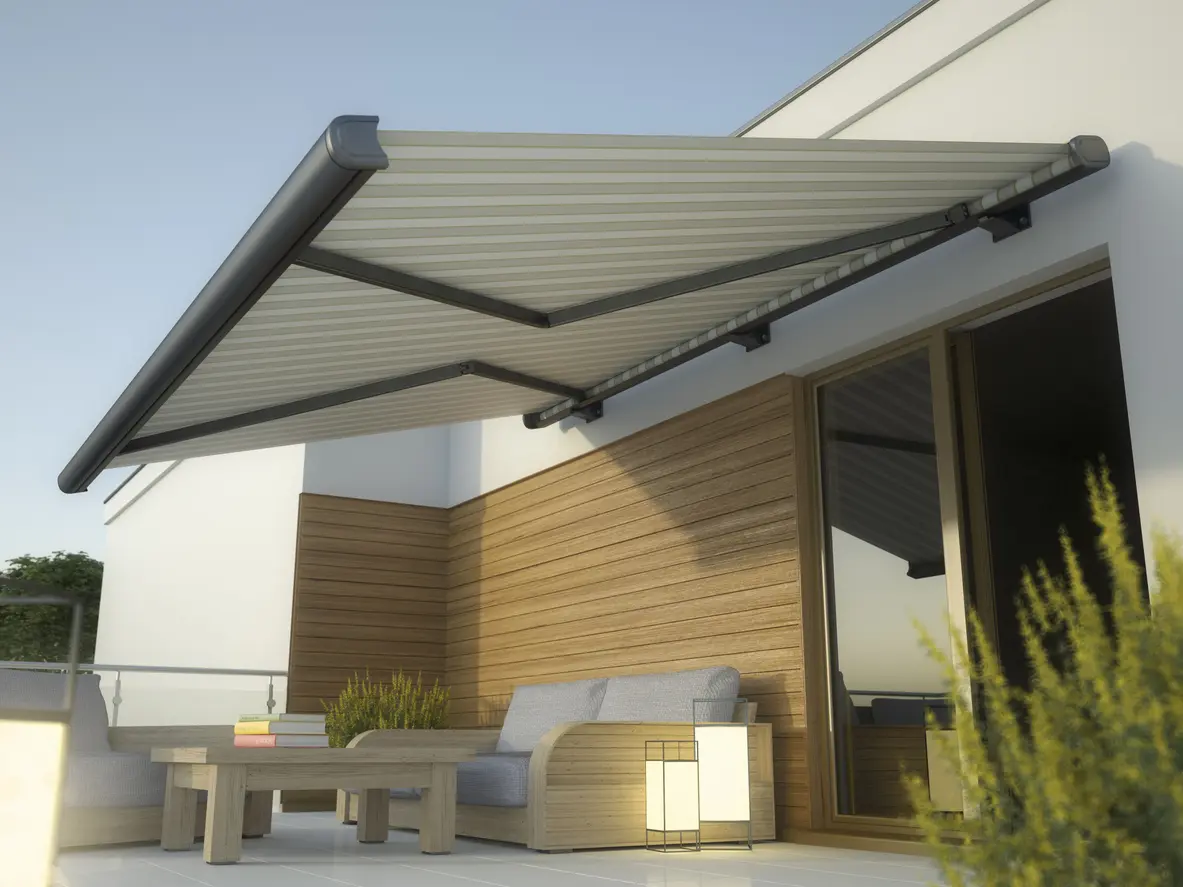
A well-chosen awning can transform an exposed patio or alfresco area into a genuinely usable outdoor room, shielding your family from Sydney's intense UV radiation while adding real value to your home. The challenge is that "awning" covers a wide range of products, from a simple straight drop fabric panel to a fully motorised folding arm system with wind sensors, and picking the wrong type for your space is an expensive mistake.
The right awning depends on four things: what you're shading (overhead or side sun), how you want to use the space, your budget, and your home's architecture. This guide walks through each awning type, what it does best, and how to match it to your specific situation.
Key takeaway: There is no single "best" awning. There's only the best awning for your space, your sun angles, and how you live outdoors.
The Main Types of Awnings Explained
Understanding the core categories is the first step. Each type solves a different shading problem, and they are not interchangeable.
Folding Arm Awnings
Folding arm awnings project horizontally outward from a wall using articulated arms, creating a shaded ceiling over your patio or deck without any support posts. The arms fold back on themselves under spring tension, allowing the awning to retract completely flat against the wall when not in use.
This is the most popular choice for Sydney alfresco areas because it delivers maximum shade over the largest footprint with zero obstruction to your outdoor space. A single unit can span from 2 metres to over 10 metres wide, with a projection of 1.5 m to 4.5 m from the wall.
- Best for: Patios, decks, alfresco entertaining areas
- Operation: Manual (hand crank) or motorised
- Projection: Typically 2.5 m to 3.5 m for a standard suburban home
- Key advantage: No posts required; full open-plan feel retained
Straight Drop Awnings
Straight drop awnings deploy vertically downward from a fixed head box, dropping a fabric panel to block side sun, glare, and wind. They are commonly installed on balconies, verandahs, and pergola perimeters to create a semi-enclosed outdoor room.
Unlike folding arm awnings, straight drops work on the vertical plane, making them ideal for blocking the low-angle afternoon sun that comes in from the west, or for providing wind and privacy screening on exposed balconies.
- Best for: Balconies, pergola sides, verandahs
- Operation: Manual (crank or strap) or motorised
- Drop: Typically 0.8 m to 3 m
- Key advantage: Excellent wind and glare protection; works well paired with a folding arm awning overhead
Fixed Awnings
Fixed awnings are permanently extended structures, usually built from Colorbond steel, polycarbonate, or aluminium. They provide constant, year-round weather protection and require virtually no maintenance once installed.
The trade-off is inflexibility. A fixed awning cannot be retracted on a beautiful winter's day when you actually want the sun, and it offers no protection for the fabric because there is no fabric to protect. Fixed metal awnings are best suited to entry points, windows, and situations where permanent shade is the goal.
- Best for: Front entries, windows, carports, commercial applications
- Operation: Permanent structure; no moving parts
- Key advantage: Extremely durable; zero ongoing maintenance
Drop Arm (Cassette) Awnings
Drop arm awnings mount above a window or door and deploy downward at an adjustable angle, typically between 30 and 90 degrees from vertical. The angled drop blocks direct sunlight while still allowing airflow beneath the awning, keeping interior rooms cooler without sacrificing ventilation or views.
They are particularly effective on north and west-facing facades where low-angle sun penetrates directly through glass, driving up indoor temperatures.
- Best for: Windows, glass doors, facades with direct sun exposure
- Operation: Manual or motorised
- Key advantage: Reduces indoor heat gain significantly; preserves views and airflow
Awning Types at a Glance
Which Awning Is Right for You? A Quick Decision Guide
How to Choose the Right Awning for Your Space
Once you understand the types, the selection process comes down to five practical questions.
1. What Are You Shading?
This is the most important question. An alfresco or open deck needs overhead coverage, which means a folding arm awning. A balcony with afternoon sun blasting in from the west needs vertical coverage, which means straight drop awnings. Windows heating up your living room need a drop arm cassette awning.
Many Sydney homes benefit from a combination: a folding arm awning for the patio ceiling and straight drop awnings on the sides to create a fully enclosed outdoor room when needed.
2. Which Direction Does Your Space Face?
Sun direction determines everything about awning placement and fabric selection.
- North-facing: Direct midday sun overhead. A folding arm awning with a 2.5 m to 3 m projection handles this well.
- West-facing: Low-angle afternoon sun is the hardest to block. Straight drop or drop arm awnings on the western side are essential; folding arm awnings alone will not stop western sun below the awning's angle.
- East-facing: Morning sun only. Often manageable without full coverage, but straight drops work well here if privacy is also a concern.
- South-facing: Minimal direct sun in Sydney. Shade is rarely the primary concern; wind and rain protection via straight drops may be more relevant.
3. Manual or Motorised?
Both work well. The choice is about convenience and lifestyle.
Manual awnings use a hand crank or strap. They are reliable and have fewer components to service. The downside is that you need to physically operate them, which means they often stay retracted when you forget to extend them on a hot morning.
Motorised awnings operate via remote control, wall switch, or smartphone app. Many systems include a wind sensor that automatically retracts the awning when gusts exceed a safe threshold, protecting both the fabric and the mechanism. For families who use their outdoor space frequently, the convenience factor is significant.
A useful rule of thumb: if the awning will be extended and retracted more than three or four times per week, motorisation pays for itself in convenience and reduced wear on the manual mechanism.
4. What Fabric Should You Choose?
Fabric choice affects durability, appearance, and how much light and heat the awning blocks.
- Solution-dyed acrylic (such as Sunbrella): The gold standard for outdoor awning fabric. Colourfast, breathable, mould-resistant, and available with UPF 50+ ratings. Lifespan of 8 to 12 years in Australian conditions with proper care.
- PVC-coated polyester: More affordable, provides better rain resistance, but less breathable and can trap heat underneath. Good for straight drop awnings on balconies where rain exclusion is a priority.
- Shade mesh: Open-weave fabric that reduces glare and heat without blocking airflow or views entirely. Popular for drop arm awnings on windows where you want to see out but block direct sun.
5. Do You Need Council Approval?
In most Sydney residential zones, retractable fabric awnings attached to the primary dwelling are exempt from planning permits under the NSW Housing Code, provided they fall within standard size thresholds. Fixed metal or polycarbonate structures may require a building permit depending on size and location.
The practical advice: check with your local council before installation if you are in a heritage overlay, strata complex, or if the structure exceeds 20 square metres. Your installer should be familiar with local requirements and can advise during the measure and quote visit.
What to Look for in a Quality Awning
Not all awnings are built the same. These are the features that separate a long-lasting installation from one that fades and fails within a few years.
- Full cassette hood: Encloses the rolled fabric when retracted, protecting it from UV and debris. Worth prioritising for north or west-facing installations where sun exposure is constant.
- Motorisation: Delivers meaningful convenience and fabric protection through automated operation. Particularly valuable for awnings that will be extended and retracted frequently.
- Wind sensor: Automatically retracts the awning when gusts exceed a safe threshold. Particularly valuable on exposed coastal and elevated Sydney properties where conditions can change quickly.
- Premium fabric: Solution-dyed acrylic fabric holds its colour and resists mould far longer than standard alternatives. The upfront difference pays off significantly over the life of the awning.
- Powder-coated aluminium frame: Resists corrosion and requires minimal maintenance, especially important for Sydney homes near the coast.
The real cost of going cheap: a low-cost awning with inferior fabric on a north-facing Sydney patio can fade, sag, and fail within three to four years. A quality installation with a full cassette and premium fabric should last 10 to 15 years with routine cleaning.
Awning Maintenance: What's Required to Make Them Last
Awnings are a low-maintenance addition to your home, but they are not zero-maintenance. A little routine care extends the life of both the fabric and the mechanism significantly.
Fabric Care
- Clean twice a year with a soft brush and mild soapy water. Avoid high-pressure washers, which can damage the fabric's coating and weave.
- Retract the awning when it is not in use, particularly during storms, strong winds, or extended periods when the outdoor space is not being used. Retraction is the single most effective way to extend fabric life.
- Never retract a wet awning and leave it closed. Allow the fabric to dry fully in the open position before rolling it away to prevent mildew growth in the folds.
- Inspect annually for small tears, fraying at the edges, or signs of UV degradation. Minor repairs are inexpensive; ignoring them leads to full fabric replacement.
Mechanism Maintenance
For folding arm awnings, lubricate the arm pivot points and the roller mechanism every one to two years with a silicone-based lubricant. Avoid oil-based lubricants, which attract dust and grime. For motorised systems, have the motor and control unit checked by a qualified installer every three to five years.
A practical note on Sydney's coastal properties: homes within a few kilometres of the ocean are exposed to salt air, which accelerates corrosion on metal components. Powder-coated aluminium frames resist this well, but the pivot points and springs should be inspected and cleaned more frequently, at least once per year.
Which Awning Is Right for You? A Quick Decision Guide
If you are still weighing up the options, this framework makes the decision straightforward:
The most common scenario for Sydney homeowners is the first: an open alfresco or deck that needs overhead shade for summer entertaining. A motorised folding arm awning with a full cassette hood and solution-dyed acrylic fabric is the best all-round investment for this situation. It handles Sydney's intense summer sun, retracts on cooler days to let winter warmth through, and protects itself automatically in windy conditions.
For anyone with a balcony or a home with significant western sun exposure, adding straight drop awnings alongside a folding arm system gives you genuine climate control over your outdoor space, not just shade.
Get Expert Advice for Your Sydney Home
Choosing the right awning is easier with a professional eye on your specific space. Sun angles, wall construction, structural fixings, and your home's architecture all affect which product will perform best and look right.
Sydney Blinds n Co offers free measure and quote visits across the Sydney metropolitan area. Our team will assess your space, advise on the best awning type and fabric for your orientation and lifestyle, and provide a detailed quote with no obligation.
Contact us to book your free measure and quote and get the right awning for your outdoor space the first time.