It's a fair question, and the honest answer is: it depends on the job.
Installing custom blinds yourself is completely doable in the right circumstances. A single small window, a straightforward roller blind, a drill and a level, and you're off. But scale that up to a full lounge room with floor-to-ceiling windows, motorised systems, or tricky bay window angles, and the calculus changes fast.
This guide gives you a straight answer based on your actual situation, not a sales pitch. We'll cover when DIY makes total sense, when it doesn't, and what you're really paying for when you bring in a professional.
The bottom line up front: If it's one or two standard windows with simple hardware, DIY is a perfectly reasonable choice. If it's a large job, complex architecture, or expensive custom product, professional installation is almost always worth the cost.
When DIY Installation Actually Makes Sense
Let's start here, because plenty of guides skip this part entirely. There are real situations where doing it yourself is the smarter call, and it's worth being upfront about that.
Small windows and simple products
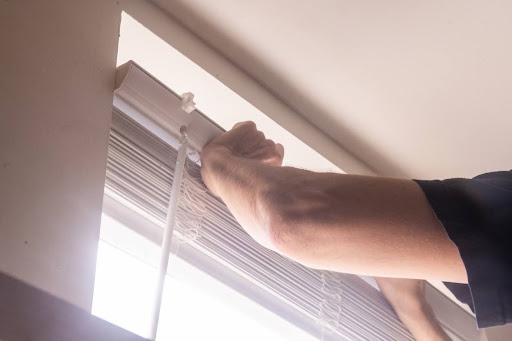
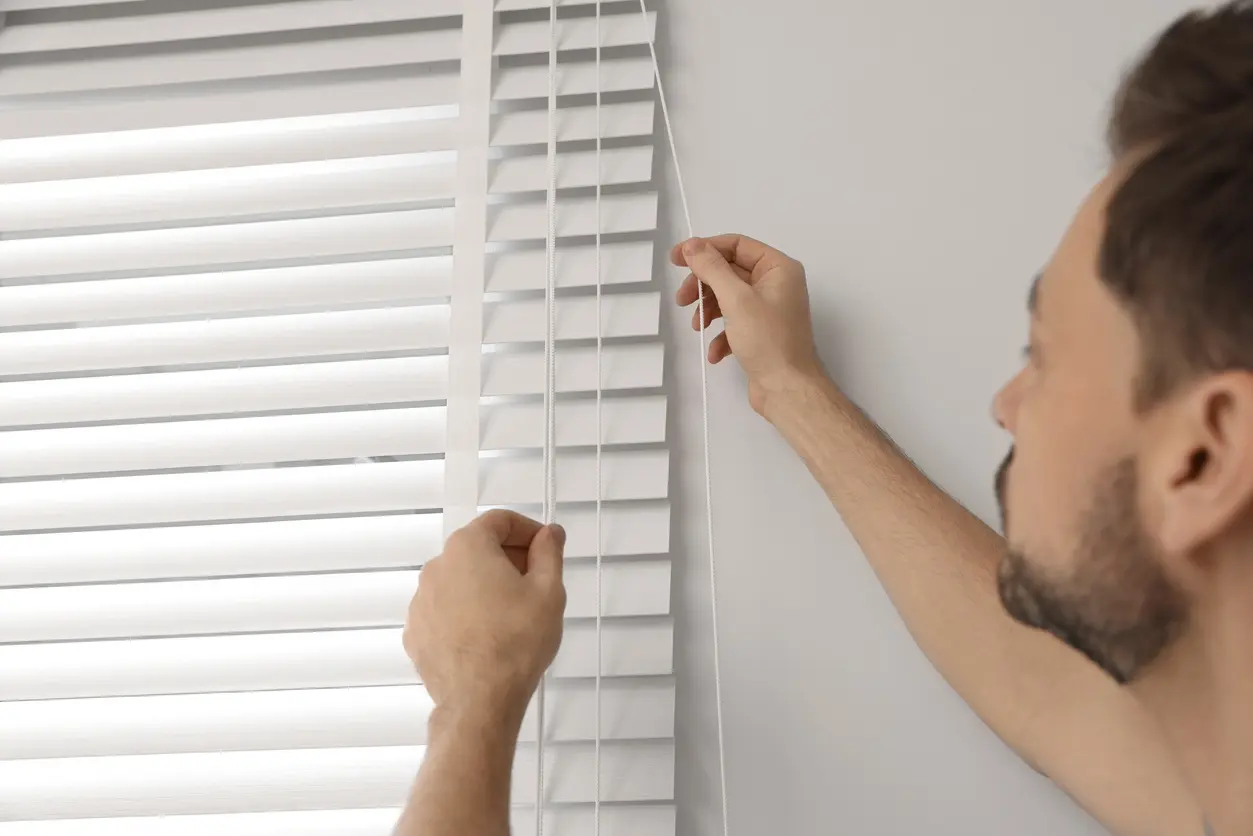
If you've got a laundry window, a small bathroom, or a single bedroom window that needs a basic roller blind or Venetian, this is the sweet spot for DIY. The installation process is genuinely straightforward: measure the recess, order to size, drill two brackets, snap the blind in. Most manufacturers include clear instructions, and the fitting hardware is designed to be user-friendly.
For jobs like this, paying for professional installation can cost more than the blind itself. It doesn't make financial sense.
You're reasonably handy
If you've hung curtain rods, put up shelving, or done any basic home maintenance, you already have the core skills. Blind installation doesn't require specialist knowledge, just:
- A drill with the right bit for your wall type (plasterboard vs masonry)
- A tape measure and pencil
- A spirit level
- Wall plugs and screws (usually supplied)
- About 30 to 60 minutes per window
If those tools are already in your shed and you're comfortable using them, a small to medium job is well within reach.
You're replacing like-for-like
Swapping out an old blind for a new one of the same type and size? Even easier. The brackets are often already in place, the holes are drilled, and you're really just unclipping the old mechanism and snapping in the new one. This barely qualifies as installation.
Budget is tight
There's no shame in factoring in cost. If you're furnishing a rental property or working through a tight renovation budget, saving $50 to $150 per window on installation adds up. As long as you measure carefully and follow the instructions, the result will be perfectly fine.
The honest caveat: DIY works best when the product is simple, the window is standard, and the stakes are low. The moment any of those change, the equation shifts.
Where DIY Tends to Go Wrong
Most DIY blind installation problems don't come from the installation itself. They come from what happens before the drill comes out.
Measuring mistakes are more common than you'd think
Custom blinds are made to your exact dimensions. If your measurements are off by even a few millimetres, the blind won't sit right, won't cover the window properly, or won't fit the recess at all. And because it's a custom product, there's no returning it for a different size.
The two most common measuring mistakes:
- Measuring only once, in one spot. Windows aren't always perfectly square, especially in older Sydney homes. A window might measure 900mm at the top and 895mm at the bottom. You need to measure in multiple places and use the smallest dimension for an inside fit.
- Confusing inside mount vs outside mount. An inside mount sits within the window recess. An outside mount sits on the wall or architrave above it. Each requires a different measurement approach, and mixing them up means the blind won't work as intended.
Incorrect fixings for your wall type
Drilling into plasterboard without a stud or the right wall anchor is one of the most common DIY mistakes across all home improvement tasks. Blinds aren't heavy, but they do cycle up and down repeatedly. A bracket fixed into soft plasterboard without proper anchoring will eventually pull away from the wall, particularly with heavier products like timber Venetians or Roman blinds.
If you're drilling into brick or masonry (common in older Sydney homes), you'll need a hammer drill and masonry bits. Without the right tools, this becomes a frustrating and potentially damaging job.
Alignment and levelling issues
A blind that's even slightly off-level is immediately noticeable every time you look at it. Getting multiple blinds across a bank of windows to sit at exactly the same height requires patience and a reliable level. It's not difficult, but it's easy to rush, and the result of rushing is obvious.
The stakes are higher with expensive products
A $60 roller blind from a hardware store is low risk. A $400 custom Roman blind in a premium fabric is a different story. The more you've invested in the product, the more it hurts if the installation goes wrong. Professional installers carry liability for their work. You don't have that safety net when you do it yourself.
What You Actually Get When You Hire a Professional
This is where it's worth being specific, because "professional installation" can sound like a vague upsell. Here's what it actually includes.
Accurate measuring from the start
A professional installer measures every window before anything is ordered. They account for window irregularities, check for obstructions (handles, locks, architrave depth), confirm the correct mount type, and take note of anything that might affect how the blind sits or operates. This single step eliminates the most expensive DIY mistake before it can happen.
For custom products, this matters enormously. You're not ordering off a shelf. The blind is built to the measurements provided, so getting them right the first time is the whole game.
The right tools and fixings for every surface
Professional installers work across all Sydney wall types daily: plasterboard, brick, rendered masonry, timber frames. They carry the right drill bits, wall anchors, and fixings for each surface and know how to locate studs or find solid fixing points without guessing. The result is a bracket that stays put for years, not one that wobbles loose after a few months.
Speed and efficiency on larger jobs
A professional can install multiple blinds in the time it takes most homeowners to do one. If you're fitting out an entire home or apartment, this is significant. What might take you a full weekend becomes a morning's work. You're also not dealing with the cleanup, the leftover packaging, or the frustration of a bracket that doesn't want to go in straight.
Handling complex products and situations
Some installations genuinely require professional expertise:
Attempting these without experience isn't just inconvenient, it can damage the product, the window, or the wall.
Warranty protection
Many blind manufacturers require professional installation as a condition of their product warranty. If something goes wrong with the mechanism six months in and you installed it yourself, you may find the warranty claim rejected. A professional installer's workmanship is also typically guaranteed separately, meaning if a bracket fails or alignment shifts, it's their problem to fix, not yours.
The real value isn't just the installation. It's the measuring, the product knowledge, the right fixings, and the accountability that comes with it.
How to Decide: A Simple Framework
Rather than a blanket recommendation, use these questions to work out what makes sense for your specific job.
Ask yourself these four questions
1. How many windows are involved? One or two windows: DIY is reasonable. Five or more: the time, effort, and risk of cumulative measuring errors makes professional installation worth it.
2. What type of product is it? Roller blinds and basic Venetians are DIY-friendly. Roman blinds, plantation shutters, motorised systems, or anything with a complex track system is better left to a professional.
3. What are the windows like? Standard rectangular windows in a modern home: straightforward. Bay windows, skylights, large sliding door panels, or anything in an older home with irregular dimensions: get a professional.
4. How much did the product cost? If the blind cost more than $200 to $300, the risk of a DIY mistake outweighs the saving on installation. Protect the investment.
The quick decision guide
There's no wrong answer here. The goal is a result you're happy with, installed in a way that lasts.
The Bottom Line
There's no universal right answer here. DIY blind installation is a legitimate option for the right job, and nobody should feel pressured into paying for professional installation when it isn't necessary.
But if you're ordering custom blinds for multiple rooms, spending a meaningful amount on the products, or dealing with anything more complex than a standard rectangular window, professional installation is a sensible investment. The measuring alone is worth it. Everything else is a bonus.
If you're unsure which side of the line your job falls on, the easiest thing to do is get a quote. A good supplier will measure your windows, recommend the right products, and give you a clear installation cost upfront. You can then decide whether to go ahead with professional installation or take the measurements and do it yourself.
At Sydney Blinds n Co, we offer free in-home consultations and quotes across Sydney. Whether you end up installing yourself or want us to handle the whole job, we're happy to help you get the measuring right from the start.
Get a free quote today and we'll come to you.