.png)
.webp)
.webp)
.webp)
.webp)
.webp)
Window treatments have always been a quiet signal of design maturity. The right choice elevates a room; the wrong one dates it. And right now, in 2026, Australian interiors are going through one of the most decisive shifts in a decade.
The cool, minimal aesthetic that dominated Sydney homes through the late 2010s and early 2020s is giving way to something warmer, more tactile, and more considered. Homeowners and designers alike are reaching for texture, layering, and quiet automation. Windows are no longer just openings to manage. They are design features to be dressed intentionally.
The big picture: Sheer curtains, S-Fold headings, natural linen fabrics, honeycomb blinds, and motorised systems are the five pillars of the 2026 window treatment conversation. Each one connects to a broader theme: warmth, functionality, and a deliberate move away from the clinical and the generic.
This guide breaks down each major trend, explains why it matters for Sydney homes specifically, and gives you the practical knowledge to make confident decisions for your own space.
Sheer Curtains: Still the Defining Trend
If a single product defines Australian residential design in 2026, it is the sheer curtain. Australian search data confirms it: sheer curtains remain by a significant margin the most-searched window covering term in the country, and the product is in its second decade of dominance with no sign of fading.
What has changed is not the product itself but how it is being specified. The reflexive white or grey sheer chosen because it was safe and inoffensive is losing ground. In its place, homeowners and designers are choosing sheers with intention, picking fabrics that do a specific job at a specific window rather than simply filling the space.
Why Sheer Curtains Still Work
Sheers do something no other window treatment can replicate. They hold daytime privacy while preserving natural light and the sense of a view. They soften hard glass and hard flooring. In a room with a lot of window area, they are the difference between beautiful diffused light and uncomfortable glare. None of that functionality has changed, and none of it is going to.
The shift is in palette, not product. Tonal sheers in warm naturals, soft sage, and sandy neutrals are replacing the default white. The sheer is still there; it is just being chosen with more care.
The Linen and Linen-Blend Revolution
The clearest fabric shift in 2026 is toward linen and linen-blend sheers. These fabrics offer a subtle texture that polyester voile simply cannot replicate. They hang with more weight, drape with more elegance, and read as premium in a way that synthetic alternatives do not. Linen-blend fabrics also have improved crease resistance compared to pure linen, making them a practical choice for the Sydney climate where humidity can be a factor.
For Sydney homes with taller openings and more glass, the weight and drape of linen-blend sheers makes a meaningful visual difference. A floor-to-ceiling sheer in a warm linen tone transforms a large window from a functional element into an architectural one.
S-Fold and Wave Headings: The Modern Standard
The heading style you choose for a sheer curtain matters as much as the fabric. Pencil pleat and eyelet headings, once ubiquitous, now read as dated in modern interiors. S-Fold (also called S-Wave or wave fold) has become the dominant contemporary heading, and for good reason.
S-Fold creates a continuous, flowing ripple of fabric that hangs in consistent, elegant curves across the full width of the window. It photographs beautifully, it hangs cleanly, and it suits the wider, taller windows common in newer Sydney builds. The heading is typically fitted to a ceiling-mounted or wall-mounted track, which allows the curtain to sit flush against the ceiling and maximise the perceived height of the room.
Best rooms for sheer curtains: Living areas, dining rooms, home offices, and as a layered element in bedrooms paired with a blockout curtain for full light control.
Explore the full range of sheer curtains available for Sydney homes.
The Layering Trend: Sheers Plus Something More
One of the most practical and visually rewarding trends of 2026 is layering: combining a sheer curtain with a second, heavier treatment to create a window that can do multiple things at once. This approach has moved from the domain of interior designers into mainstream residential use, and it is easy to understand why.
A layered window gives you complete flexibility across the day. During daylight hours, the sheer filters light and maintains a sense of openness while providing privacy from the street. At night, the outer layer, whether a blockout curtain, a roller blind, or a heavier drape, closes to provide full privacy and darkness.
How to Layer Effectively
The most popular setup in Sydney homes right now involves a double track system:
- Inner track (closest to the glass): Sheer curtain in a linen-blend or voile fabric
- Outer track: Blockout curtain or a heavier decorative drape in a complementary tone
- Track style: Ceiling-mounted double track for a seamless, built-in look
This setup works particularly well in bedrooms, where you want the option of soft morning light through the sheer without committing to full darkness, and full blackout when you need it. In living areas, the same system lets you manage afternoon glare from Sydney's western sun without closing off the room entirely.
The thermal bonus: Layering also improves a room's thermal performance. A sheer plus a blockout creates an air gap between the glass and the room, which acts as insulation. In Sydney summers, this can make a noticeable difference to how much heat enters north and west-facing rooms.
Key takeaway: Layering is not a luxury upgrade. It is the most functional window treatment configuration available, and the cost difference over a single treatment is modest when weighed against the daily flexibility it provides.
Natural Textures and the Earth-Tone Palette
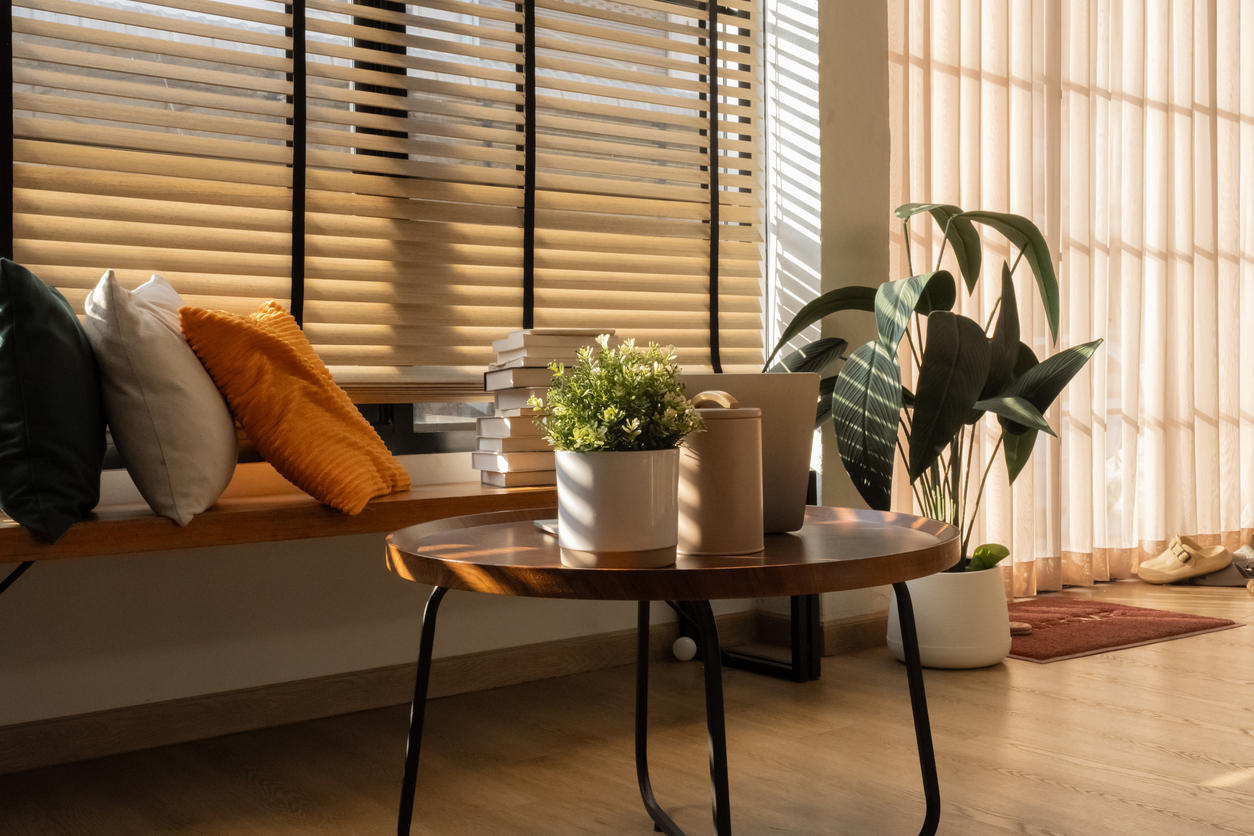
The cool grey and stark white palette that defined Australian interiors for the better part of a decade is being replaced. What is arriving in its place is warmer, softer, and more grounded: cashmere cream, sandstone, oatmeal, sage, and olive are the tones showing up consistently across curtains, blinds, and hardware in 2026.
This is not a passing colour trend. It connects to a broader design movement toward biophilic interiors, spaces that draw on natural materials and organic tones to create a sense of calm and connection to the outdoors. In a city like Sydney, where the natural environment is a constant backdrop, this direction feels especially appropriate.
Fabrics That Carry the Texture Story
The texture shift is as significant as the colour shift. Three materials are leading the conversation:
The key insight here is that texture adds visual interest without requiring pattern. A room dressed in tonal naturals with varied textures reads as sophisticated and considered rather than flat or safe. This is particularly relevant for open-plan Sydney homes where the living, dining, and kitchen areas share a visual language.
What This Means for Your Choices
If you are updating your window treatments in 2026, the practical takeaway is straightforward: avoid high-gloss white synthetics and lean toward matte, natural-toned fabrics. Even a roller blind in a warm sandstone linen-look fabric reads as more current than the same blind in a cool white.
The same principle applies to hardware. Matte black, brushed brass, and timber-look tracks and pelmets are replacing the polished chrome and white plastic of previous years. The hardware is now part of the design rather than something to hide.
Thermal Performance: Honeycomb Blinds and the Insulation Conversation
With energy costs a persistent concern for Sydney households, window treatments are increasingly being evaluated not just on aesthetics but on thermal performance. The window is the weakest point in a home's thermal envelope: glass conducts heat in summer and loses warmth in winter. The right window treatment addresses both problems.
Honeycomb blinds (also called cellular blinds) are the standout performer in this conversation. Their unique structure, layers of hexagonal cells that trap air between the fabric and the glass, creates genuine insulation. In Sydney's climate, which swings from humid summers to cool winter nights, this dual-season performance makes honeycomb blinds one of the most practical investments available.
Honeycomb Blinds vs. Standard Roller Blinds
The 2026 approach is not to choose between aesthetics and performance but to layer them. A honeycomb blockout blind on the glass for thermal control, paired with a sheer curtain on a separate track for softness and diffused light during the day, gives you both. This is the layering principle applied with a functional rather than purely decorative intent.
A note on light-filtering curtains: These sit between sheer and blockout on the privacy and light control spectrum. They are an increasingly popular choice for north-facing Sydney living rooms where you want to reduce harsh afternoon light without losing the warmth and brightness of natural light entirely.
Motorisation: From Luxury to Standard
Motorised window treatments have been available for years, but 2026 is the year they crossed from premium upgrade to expected feature. The shift has been driven by three things: quieter motors, battery-powered options that eliminate the need for hardwiring, and seamless integration with smart home systems like Google Home, Amazon Alexa, and Apple HomeKit.
The practical case for motorisation is strongest in two scenarios that are increasingly common in Sydney homes:
- High or hard-to-reach windows: Skylights, clerestory windows, and the tall glazing common in newer builds are difficult or impossible to operate manually. A motorised system solves this problem entirely.
- Whole-of-home automation: For homeowners who want their blinds to open with their morning alarm and close as the afternoon sun hits the western facade, motorisation is the only viable solution.
What Has Changed in 2026
The motors themselves are significantly quieter than they were even three years ago. Battery-powered motors have improved to the point where a full charge lasts months under normal use, and retrofitting an existing blind or curtain track is now a straightforward process that does not require an electrician.
Automation has also become more intelligent. Current systems can be programmed to respond to sun position, time of day, or temperature readings, adjusting your roller blinds or curtains automatically without any manual input. For north and west-facing Sydney rooms, this kind of reactive automation can meaningfully reduce cooling loads over summer.
The real value of motorisation is not the convenience of pressing a button. It is the ability to use your window treatments consistently and optimally, something most people do not do when operation requires physical effort.
The cost of motorisation has also come down. While hardwired systems in new builds remain the premium option, battery-powered retrofit motors now make smart window treatments accessible for any budget.
Floor-to-Ceiling Curtains: The Height Illusion That Works
Enquiries for floor-to-ceiling curtains have grown sharply in 2026, and the reason is straightforward: they make rooms look bigger, ceilings look higher, and windows look more significant than they actually are. In Sydney's mix of older terrace houses with modest ceiling heights and newer apartments with standard 2.4-metre ceilings, this visual trick has real value.
The technique is simple. Mount the curtain track or rod as close to the ceiling as possible, regardless of where the window actually ends. The curtain falls from near the ceiling to the floor, drawing the eye upward and creating the impression of a much taller, grander window. The effect is most dramatic with a sheer curtain in a light, airy fabric that pools slightly on the floor.
Getting It Right
A few practical points for Sydney homes:
- Track placement: Aim for 10 to 15 centimetres below the ceiling, or flush with the ceiling cornice if you have one. The higher the track, the more dramatic the effect.
- Fabric weight: Lighter fabrics like linen-blend sheers work best for floor-to-ceiling installations because they hang without pulling the track down and move beautifully in a breeze.
- Puddling vs. breaking: A slight puddle (5 to 10 centimetres of excess fabric on the floor) reads as intentional and luxurious. A curtain that just grazes the floor reads as a measuring error. Choose one or the other deliberately.
- Width: For the full effect, use curtains that are 1.5 to 2 times the width of the window. Skimping on width makes even the best fabric look mean.
This trend pairs naturally with S-Fold headings and linen-blend sheers, which is why those three elements tend to appear together in the best-dressed Sydney interiors of 2026.
Quick Reference: 2026 Window Treatment Trends at a Glance
For homeowners who want a fast summary before diving into the detail, here is where the market sits right now:
The highest-impact changes are also the simplest: updating your heading style, raising your curtain track height, and choosing a linen-blend sheer over a synthetic white. These three decisions alone will bring a room's window treatment into 2026 without a full replacement.
Choosing What Is Right for Your Sydney Home
Trends are useful context, but the right window treatment is always determined by the specific window, the room's function, and the way the home is used. A few principles that hold regardless of what is fashionable:
Match the treatment to the window's job. A bedroom window needs privacy and light control above all else. A living room window facing north needs glare management without sacrificing warmth. A study window may need acoustic performance if the home is near a busy road. Start with the functional requirement, then choose the treatment that meets it and happens to look current.
Think in systems, not individual windows. The most cohesive interiors in Sydney treat all the windows in an open-plan space as a single design decision. Consistent heading styles, consistent fabric tones, and consistent hardware across a living and dining area creates a sense of intention that single-window decisions rarely achieve.
Invest where it matters most. The windows you see every day, the living room, the main bedroom, the entry, deserve the most considered treatment. Secondary rooms can follow the same direction with more modest investment.
Whether you are starting from scratch in a new build, updating a renovation, or simply replacing tired existing treatments, the 2026 direction is clear: warmer, more textured, more layered, and more considered. The good news is that most of these changes are achievable at any budget with the right advice.
Sydney Blinds n Co offers free in-home quotes across the Sydney metropolitan area, with expert advice on fabric selection, heading styles, track systems, and motorisation options. Get in touch to book your consultation.
.png)





%201.png)