
Custom window treatments are one of those home investments that look straightforward until you're standing in a showroom surrounded by fabric swatches, louvre widths, and motorisation options you didn't know existed. Unlike off-the-shelf blinds from a hardware store, custom treatments are built to your exact specifications, which means the decisions you make upfront have a direct impact on how satisfied you'll be five years down the track.
This guide walks through the key considerations every homeowner should think through before committing. Whether you're looking at plantation shutters, roller blinds, or floor-to-ceiling curtains, the framework is the same.
The core insight: Custom window treatments aren't just a decorating decision. They affect how your home feels to live in, light levels, privacy, temperature, and noise. Getting the brief right before you buy is the difference between a result you love and one you tolerate.
Start With the Room's Job, Not the Product
Before you look at a single sample, ask yourself what you actually need the window treatment to do. This sounds obvious, but most buyers skip it and end up choosing based on aesthetics alone, then realise six months later that their beautiful sheer curtains do nothing for the 6 am sun in the bedroom.
Define your priorities for each room
Different rooms have genuinely different requirements. A bedroom needs something different from a living room, which needs something different from a home office or a bathroom.
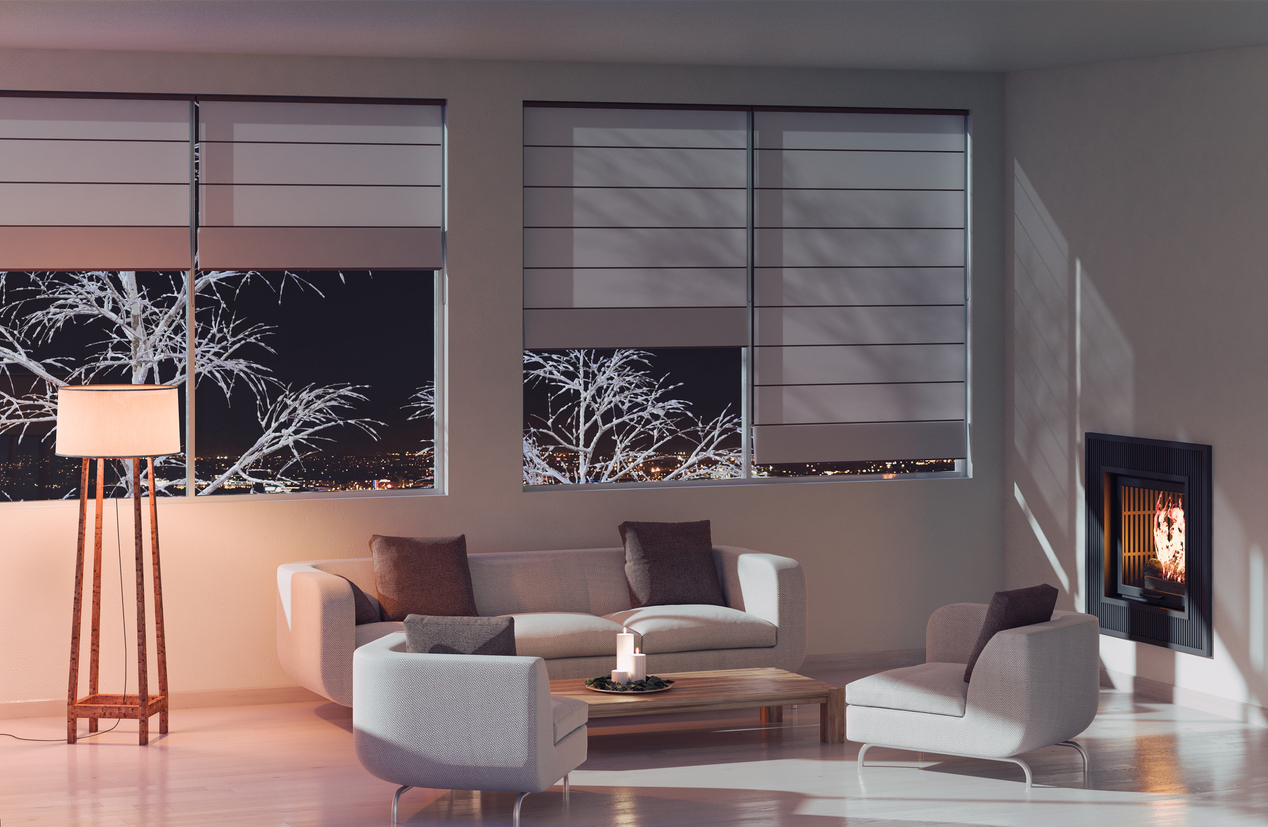
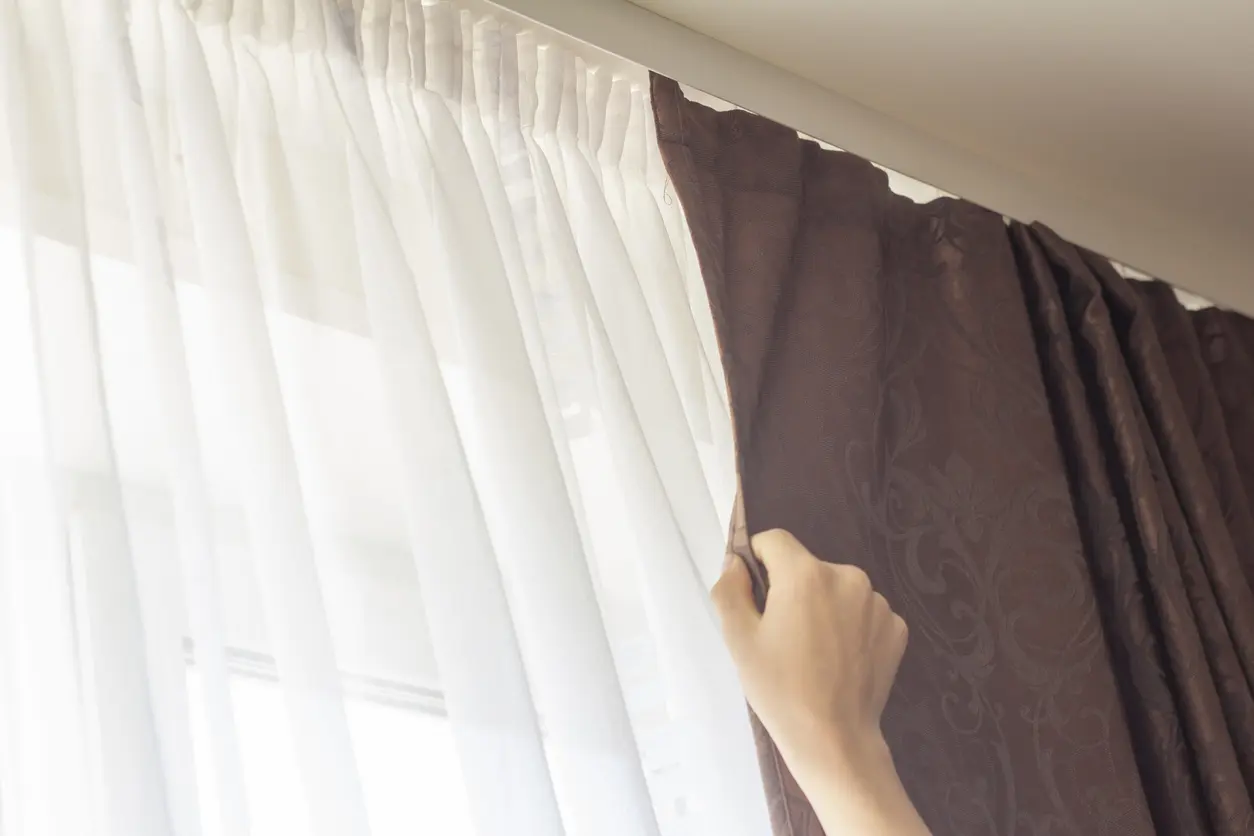
Once you know what each room needs to do, the product shortlist almost writes itself. A bedroom that needs total darkness points toward blockout curtains or a blockout roller blind. A living room that needs flexible light control without sacrificing the view points toward zebra blinds or sheer curtains layered with a blockout option.
Don't treat every window the same
It's tempting to pick one product and run it through the whole house for consistency. That approach works visually, but it often means compromising function in at least a few rooms. A better approach is to anchor the aesthetic with a consistent colour palette or material finish, then choose the right product type for each room's specific needs.
Understand the Light in Your Home
Sydney's climate is a genuine factor in window treatment decisions. Strong northern sun, intense afternoon westerly light, and the coastal glare that comes with proximity to the water all create conditions that are harder on fabrics and more demanding of your window treatments than a mild European climate.
How your home's orientation affects the decision
The direction your windows face determines how much sun they receive and at what time of day. This has a direct bearing on what product will actually work.
- North-facing windows receive consistent sun throughout the day. They're ideal for living areas but can cause significant heat build-up. Cellular honeycomb blinds are particularly effective here, as their insulating structure reduces heat transfer without blocking light entirely.
- East-facing windows get intense morning sun, which is an issue in bedrooms. Blockout solutions are often essential.
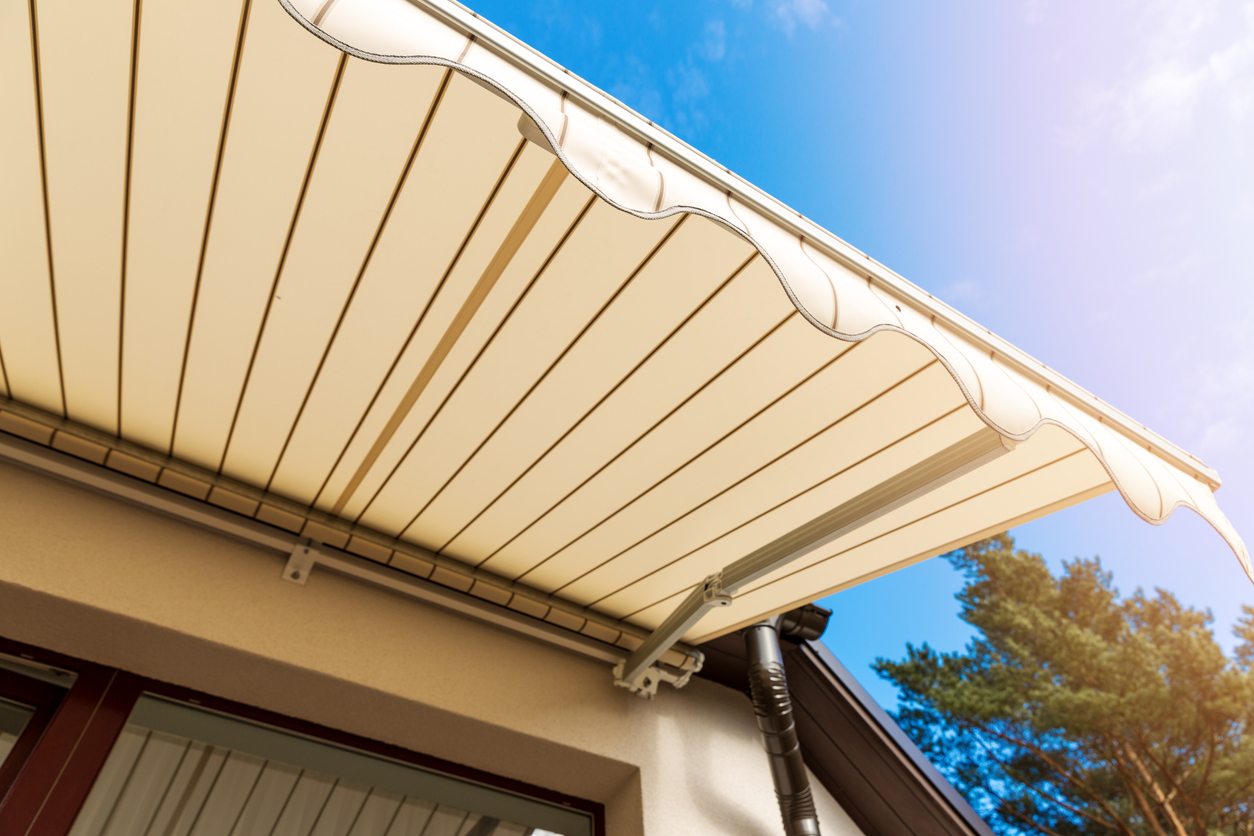
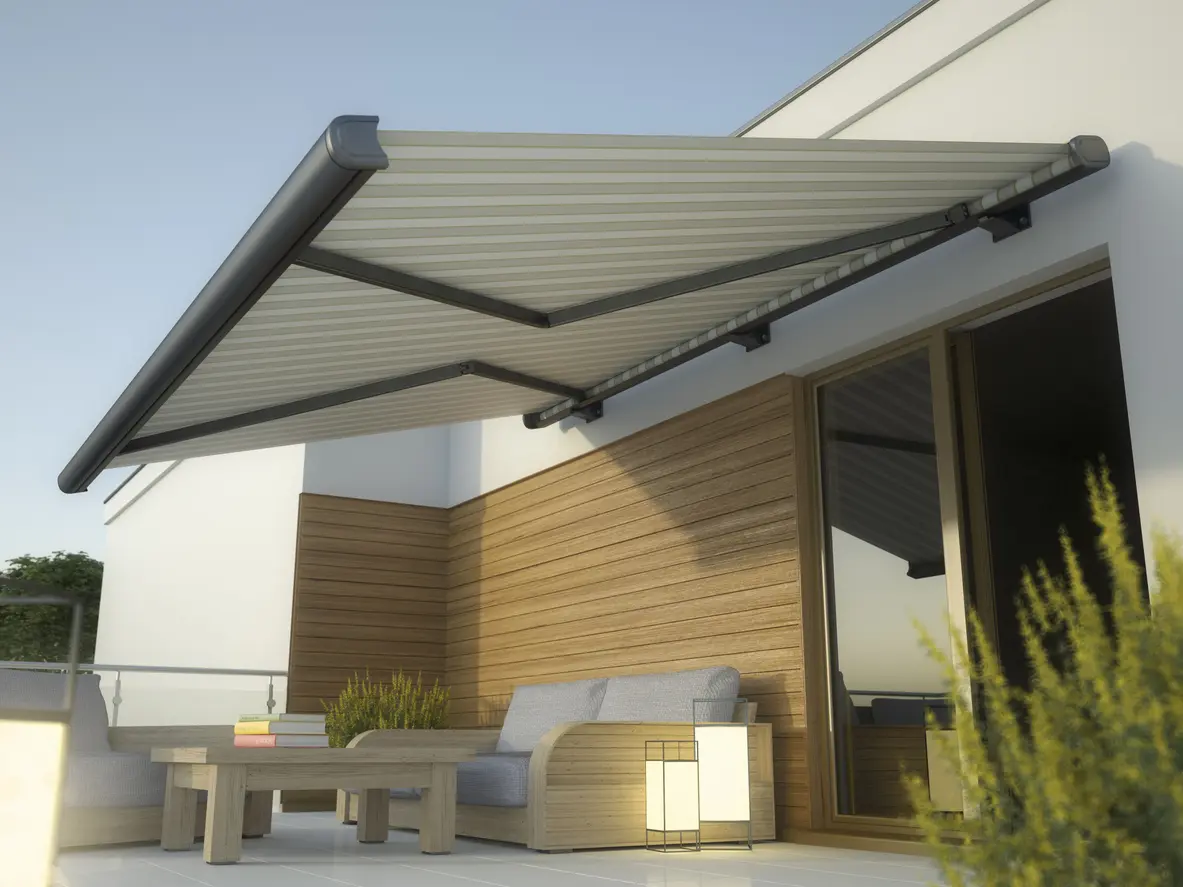
- West-facing windows cop the harshest afternoon heat. Exterior awnings can block heat before it enters the glass, making them more effective than interior treatments for temperature control.
- South-facing windows receive little direct sun, so light filtering is usually the priority rather than blockout.
The difference between light filtering and blockout
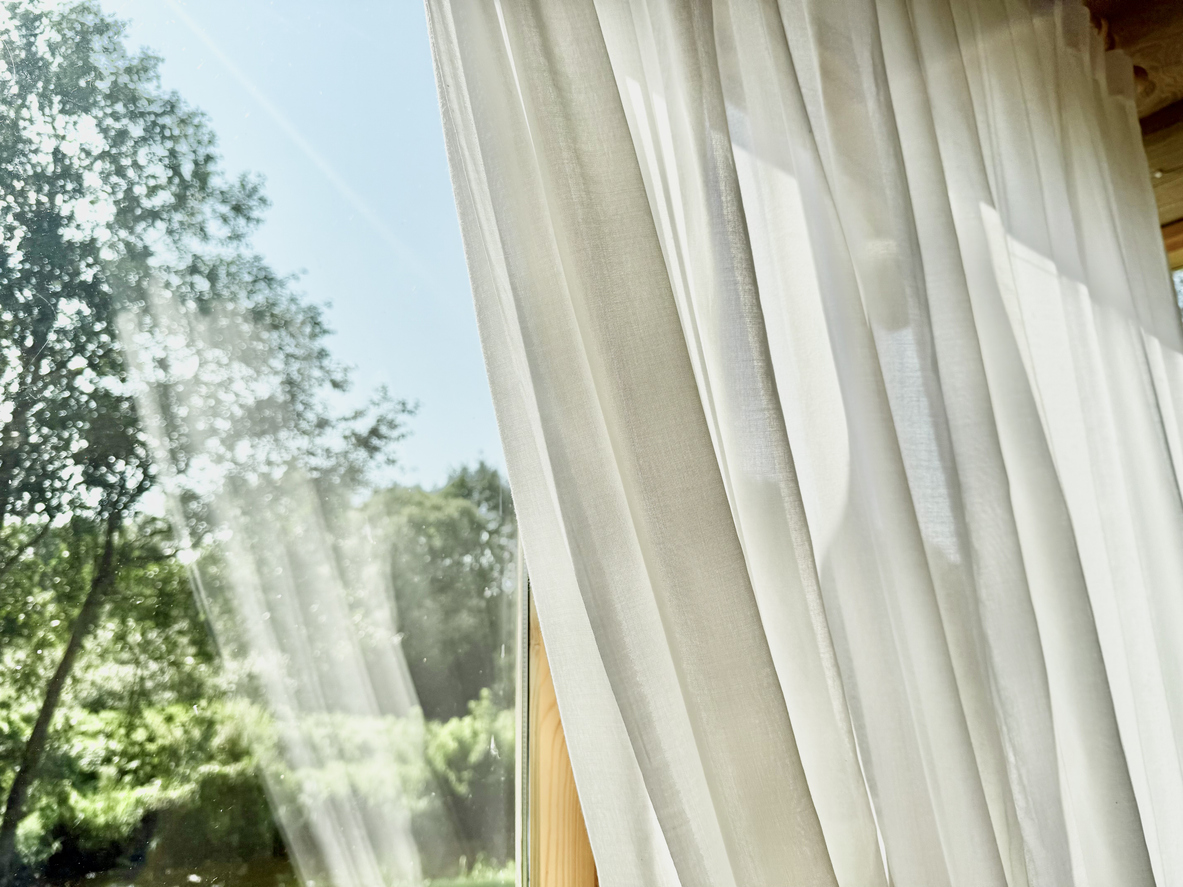
This is one of the most common points of confusion for first-time buyers. Light filtering fabrics diffuse and soften incoming light while maintaining daytime privacy; you can see light and shadow but not detail. Blockout fabrics (or materials like plantation shutters with closed louvres) eliminate virtually all light.
The practical test: close your eyes and imagine the room at 7 am on a bright summer morning. If you'd want it darker, you need blockout. If you'd just want the glare softened, light filtering is enough.
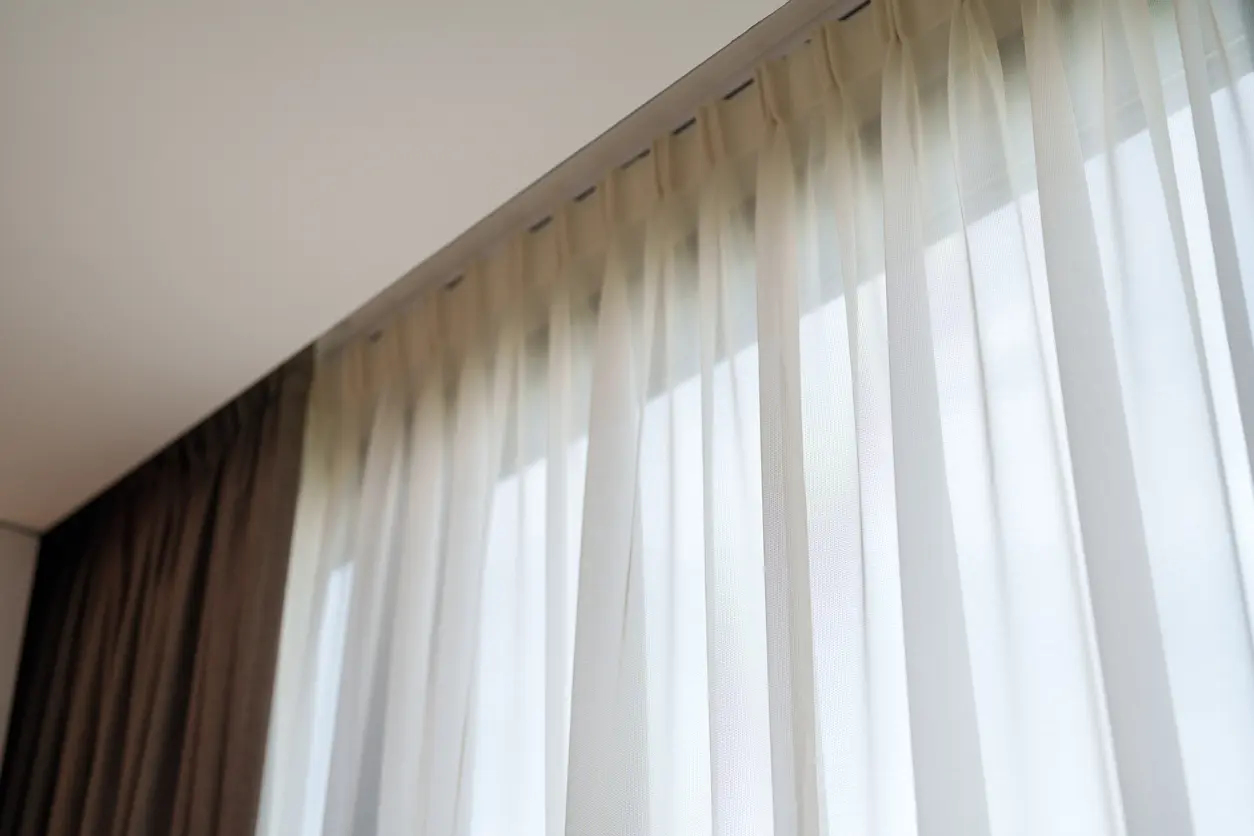
Many homeowners end up layering both, a blockout blind for night and morning use, with a sheer curtain for daytime softness. It's a more expensive solution but often the most liveable one.
Privacy Needs Are More Nuanced Than You Think
Privacy is almost always on the list, but it's worth being specific about what kind of privacy you actually need. There are three distinct types, and different products solve different problems.
The three types of window privacy
1. Daytime privacy from the street or neighbours. This is about preventing people outside from seeing in while you're moving around during the day. Light filtering fabrics and sheer curtains handle this well when the light outside is brighter than inside. The catch: once it gets dark and you turn your lights on, the equation reverses; light-filtering fabrics offer almost no privacy at night.
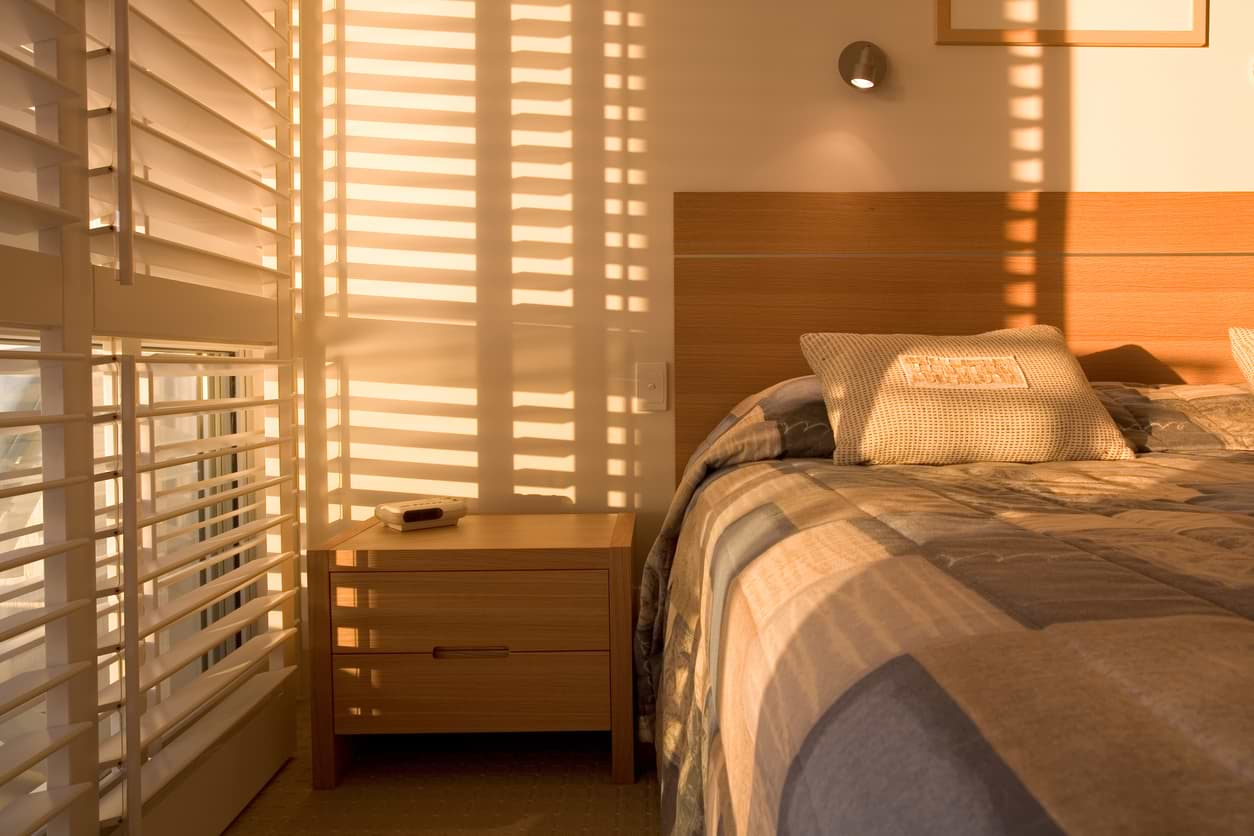
2. Night-time privacy At night, with interior lights on, you need a fabric or material that physically blocks the line of sight. Blockout blinds, plantation shutters, and roller shutters all solve this. Sheer curtains alone do not.
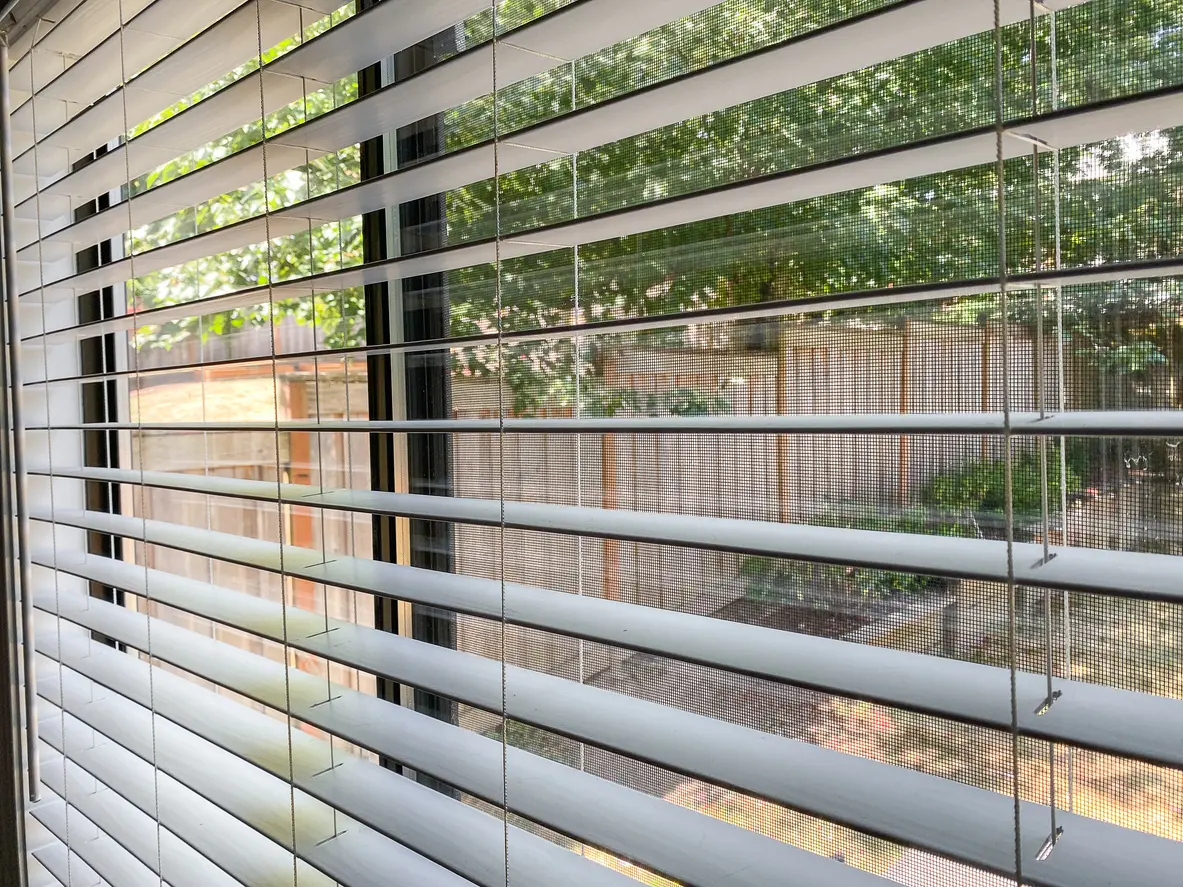
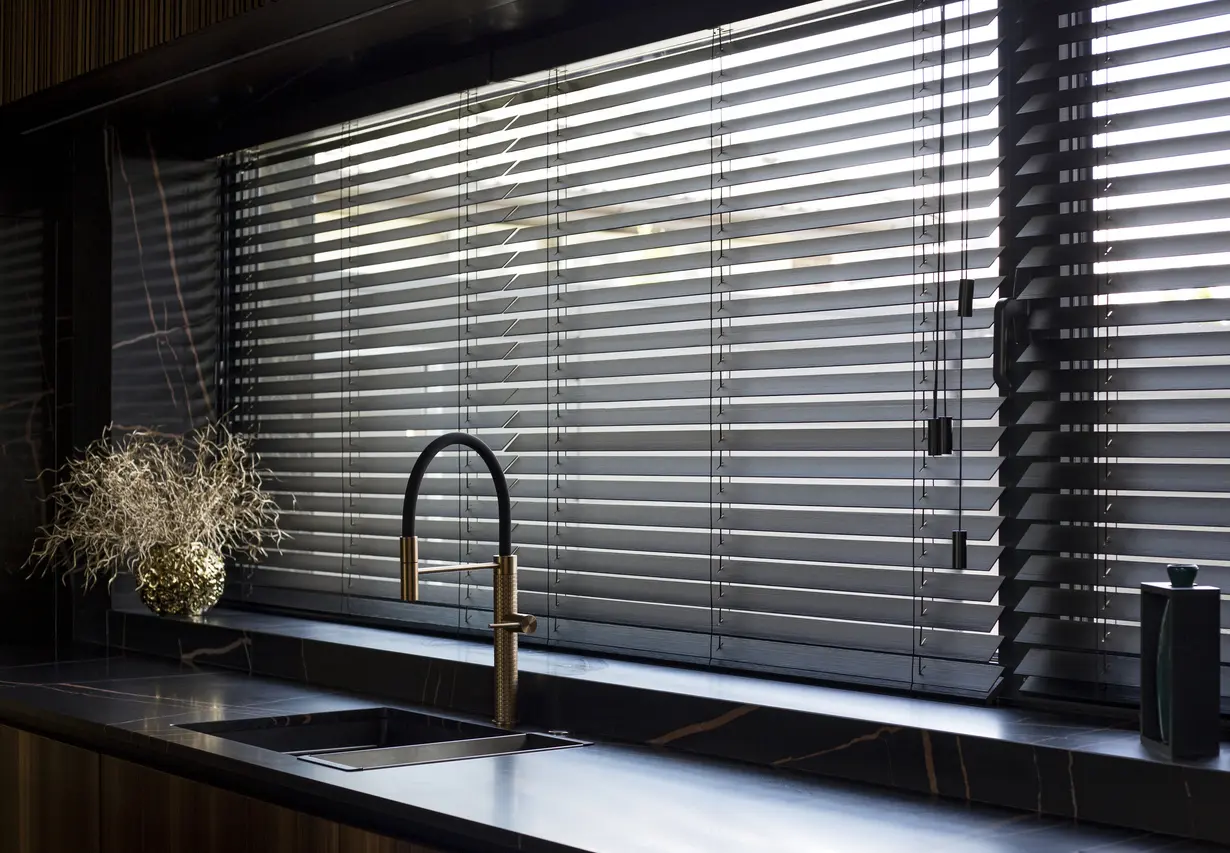
3. Overlooked or elevated sightlines If you're in a terrace house with neighbours looking down into your living room, or an apartment with a building opposite at the same height, standard treatments may not be enough. Venetian blinds or vertical blinds with adjustable louvres give you the ability to angle light in while blocking the sightline, a solution that static fabrics can't replicate.
Worth knowing: Many Sydney homes, particularly in inner suburbs, have both street-facing and neighbour-facing windows with very different privacy requirements. It pays to assess each window individually rather than applying one blanket solution.
Think About Longevity and Maintenance Before You Fall in Love With a Fabric
Custom window treatments are a long-term investment. A quality blind or shutter installed professionally should last 10 to 15 years or more. That means the fabric or material you choose needs to hold up to daily use, UV exposure, and the cleaning demands of your household.
Questions to ask about durability
Before committing to a fabric or material, work through these:
- Do you have young children or pets? Fabrics with textured weaves or loose threads can snag. Wipe-clean PVC or aluminium options are far more practical.
- Is the room high-humidity? Bathrooms and kitchens need moisture-resistant materials. Timber blinds and certain fabrics will warp or mould. Aluminium shutters are purpose-built for wet areas.
- How much direct UV exposure does the window get? Intense sun fades fabrics over time. Sunscreen or blockout fabrics with UV-stable coatings last significantly longer than standard fabrics in north or west-facing windows.
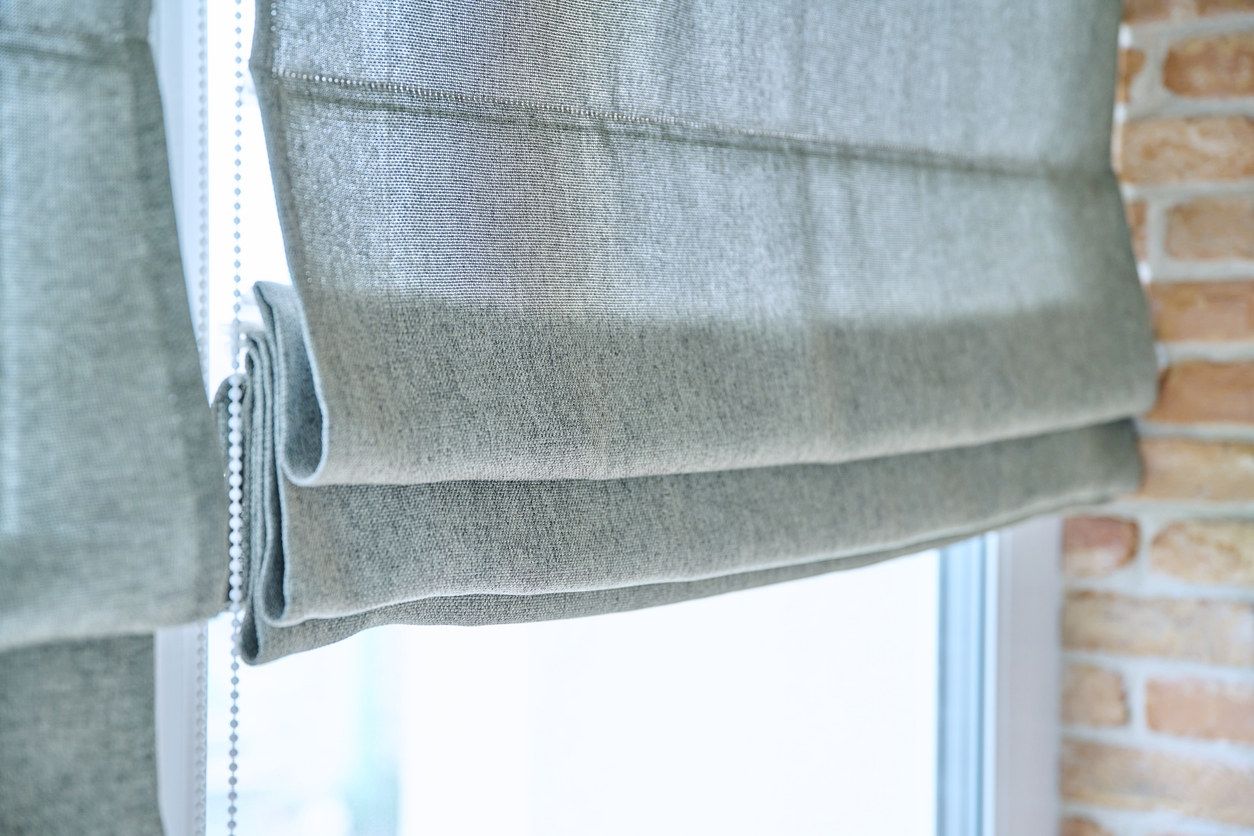
- How often are you willing to clean them? Pleated fabrics and roman blinds trap dust and require more effort to clean than roller blinds or hard shutters.
The real cost of cheap materials
There's a meaningful difference between a custom treatment made from quality components and one that uses economy fabrics or hardware. The upfront price gap can look significant, but a blind that needs replacing after four years isn't a saving, it's a cost that compounds. Professional installation also matters: a blind that isn't level, doesn't operate smoothly, or has gaps at the edges will frustrate you every day.
The benchmark to use: if a quote seems unusually low, ask specifically about the fabric grade and the hardware brand. Reputable suppliers will be able to answer this clearly.
Operation and Convenience Matter More Than You Expect
How you'll actually use the window treatment day-to-day is something most buyers underestimate. The operation method affects convenience, child safety, and whether you'll bother adjusting the treatment at all, which matters more than it sounds.
Cord, chain, wand, or motorised?
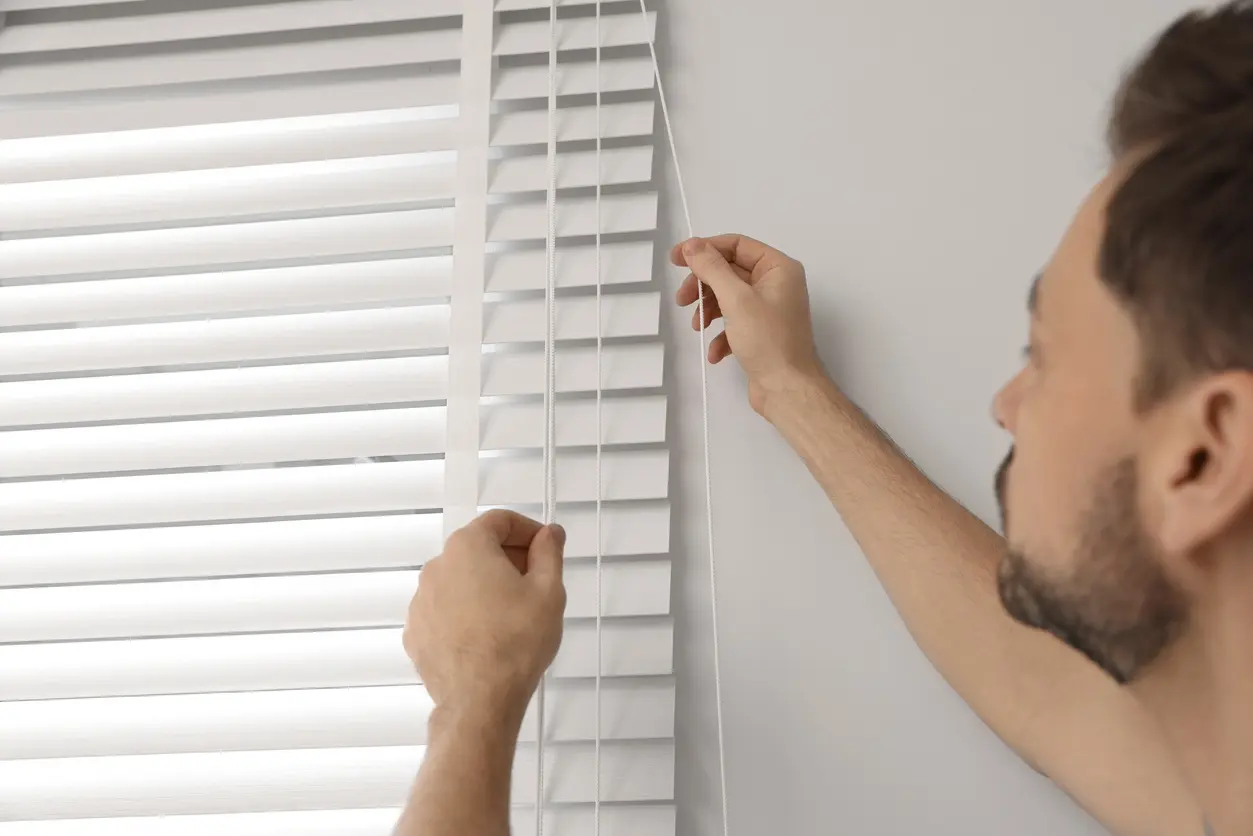
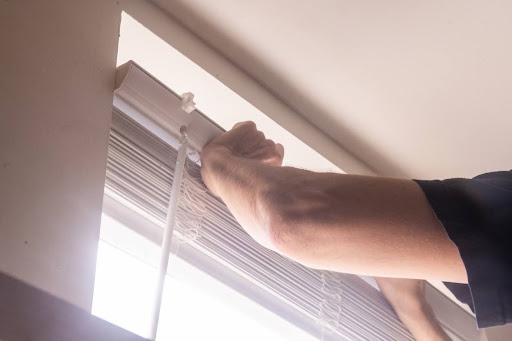
- Corded and chained blinds are the traditional standard. They're reliable and cost-effective but require manual operation and present a safety risk in homes with young children. Australian standards have progressively tightened regulations around blind cords, and reputable suppliers will guide you on compliant options.
- Wand-operated blinds (common on vertical blinds and some roller systems) eliminate the cord loop hazard while keeping operation manual and simple.
- Motorised treatments are increasingly popular and genuinely practical, not just a luxury add-on. A motorised roller blind on a high or hard-to-reach window is far more likely to actually be used than a corded one that requires a step stool. Smart home integration (controlling blinds via an app or voice assistant) is a real option for new builds and renovations.
Child safety is non-negotiable
The Australian Competition and Consumer Commission (ACCC) has identified blind and curtain cords as a serious strangulation hazard for young children. If you have children under six in the home, corded blinds are not recommended. Ask your supplier specifically about cord-free or motorised alternatives for any rooms children access.
Think about who operates the blind
High windows in stairwells, skylights, or windows behind large furniture are often left permanently closed because they're too inconvenient to operate. If a window is difficult to reach, build the solution into the product choice, motorisation, a wand extension, or a remote-operated system, rather than assuming you'll manage with a standard cord.
Budget Realistically and Account for the Full Scope
Custom window treatments cost more than off-the-shelf options, and there's a reason for that: they're made to your exact measurements, from materials you've chosen, and installed by someone who knows what they're doing. The question isn't whether to budget more than you would at a flat-pack retailer; it's how to allocate that budget wisely across your home.
Where to prioritise spending
Not every window deserves the same investment. A practical approach is to tier your budget:
- High priority (spend more): Bedrooms, main living areas, and any window with significant light, privacy, or thermal issues. These rooms have the most impact on daily comfort and are worth investing in quality.
- Medium priority: Secondary living areas, dining rooms, and home offices. Good quality products but not necessarily the top-tier fabric or motorisation.
- Lower priority: Utility rooms, garages, and spaces you rarely use. Functional solutions are fine here.
What's included in the price?
Always confirm what a quote covers before comparing suppliers. A complete custom window treatment quote should include:
- In-home measurement
- Custom manufacture to your window dimensions
- Professional installation
- Warranty on both product and installation
Some suppliers quote supply-only and add installation separately. Others include a free in-home consultation as part of the process. Understanding what's in the price prevents surprises at invoice time.
A note on value: the cheapest quote rarely represents the best outcome. Custom window treatments are a once-in-a-decade purchase for most homeowners. Saving a few hundred dollars on a product you'll use every day for ten years is rarely worth it if it means compromising on quality, fit, or service.
The Value of an In-Home Consultation
There's a limit to how much you can figure out from a website or showroom visit. The light in your home, the exact dimensions of your windows, the way your window frames are constructed, and the specific challenges of each room are all things that only become clear on-site.
A professional in-home consultation does a few things that are genuinely hard to replicate otherwise:
- Accurate measurement: Custom treatments are only as good as the measurements they're built from. A millimetre off on a plantation shutter can mean gaps that ruin the look and the function.
- Identifying constraints: Some windows have obstructions (handles, locks, reveals) that limit which mounting options work. An experienced consultant spots these immediately and adjusts the recommendation.
- Seeing your actual light: A consultant can assess how light moves through your space and recommend fabrics or materials that perform in your specific conditions, not just in a showroom under controlled lighting.
- Comparing samples in context: Fabric colours look different in natural light versus artificial light. Seeing samples in your actual space, against your walls and flooring, is the only reliable way to make a colour decision.
Most reputable Sydney window treatment suppliers offer free in-home quotes. It costs nothing, and the information you get from an hour with an expert is worth more than hours of online research.
Ready to see what works in your home? Request a free in-home quote from Sydney Blinds n Co and get expert advice tailored to your windows, your rooms, and your budget.